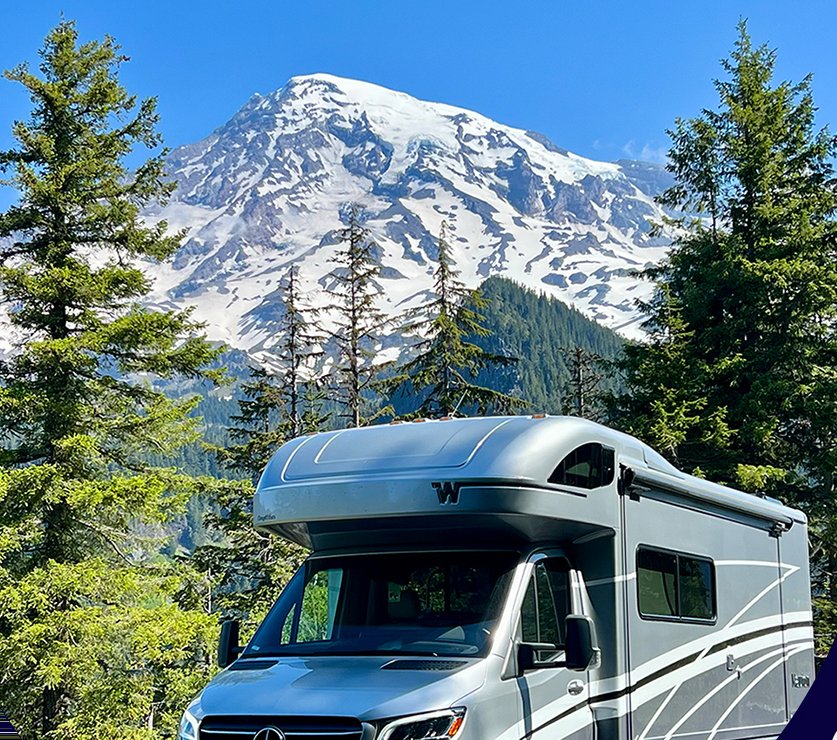
Boondocking a View or Navion
Power, water, waste and propane math for camping without hookups in a Sprinter-based Class C — and how to pick a spot.
Draft. This is a skeleton from the talk outline — fill in your real tank sizes, battery bank, and the site-selection stories that make it useful.
Boondocking (dry camping, dispersed camping) means no shore power, no water hookup, no sewer. A View or Navion does it well because it’s small and efficient, but every system becomes a budget you have to manage. Four budgets: power, water, waste, propane — plus where you park.
Power
The 12 V house system is usually the first thing to run out.
- Know your bank. Usable amp-hours = rated capacity × depth of discharge you’ll accept (roughly 50% for flooded/AGM, 80–100% for lithium). Fill in your bank here.
- Know your draw. The furnace fan, the fridge on DC, the water pump, lights, and phantom loads add up. A night of furnace cycling can be 30–60 Ah on its own.
- Putting it back: solar during the day, the alternator while driving, or the generator / engine. Solar rarely fully refills a depleted bank on a short fall day — plan for a deficit and a way to cover it.
- Biggest wins: swap interior bulbs to LED, run the fridge on propane, keep the furnace low and use a warm sleeping bag, and charge devices in the truck while driving.
Water
- Fresh: fill in your fresh tank size. Figure 3–6 gallons per person per day if you’re careful — less with a spray-bottle dish routine and Navy showers.
- Stretchers: wet-wipe days, catch warm-up water in a jug, paper plates, dishwashing in a tub you empty into the gray tank.
Waste
Gray fills faster than you expect and is usually what ends a trip.
- Gray: fill in size. Shower water dominates. A collapsible tote lets you haul to a dump station without breaking camp.
- Black: lasts much longer; a good enzyme treatment and enough flush water prevent the dreaded pyramid and false “full” readings.
- Sensors read wrong when coated — don’t trust them over a tank you filled yourself.
Propane
- Runs the furnace, water heater, fridge (on gas), and stove. The furnace is by far the biggest user in cool weather.
- Fill in your tank capacity and a rough cold-night burn rate.
- You can’t refill an undermounted ASME tank yourself — know where the nearest fill is before you’re low.
Picking a spot
- Legal: BLM and National Forest dispersed camping (14-day limits, stay on existing sites/roads), LTVAs, Harvest Hosts, casinos, some trailheads. Apps: onX Offroad, FreeRoam, iOverlander, Campendium.
- Access: a Sprinter is long and not high-clearance — scout turnarounds and soft shoulders before committing; watch overhead branches.
- Level: pick the flattest spot you can; you only carry so many leveling blocks and the fridge wants to be near level.
- Sun vs. shade: solar wants the open sky; comfort wants afternoon shade. In fall, take the sun.
- Neighbors and noise: leave space, keep the generator to posted/quiet hours, and leave the site cleaner than you found it.
A simple pre-trip check
- Batteries full, solar working, generator starts.
- Fresh tank full, water heater and pump working.
- Gray and black tanks empty, enough black-tank treatment and flush water.
- Propane topped off; furnace and stove light.
- Downloaded offline maps and a shortlist of dump stations and fill points.
Draft based on the boondocking tech talk given by Clint DuBois at the 2024 Nehalem Bay rally. Expand with your own numbers and photos.